B2B ERP
INFO ARCHITECTURE
DESIGN SYSTEM
Infor: Architecting the Enterprise Ecosystem
Transformed a fragmented MVP into a scalable, WCAG 2.2 AA compliant platform. Restructured the information architecture to solve critical lead generation and navigation bottlenecks. Strategic Information Architecture & Component System (Conceptual phase for future scalability).
01 / THE CHALLENGE
Lost in the Ecosystem
Role: UX Strategy & Lead Product Designer.
Timeline: 2023 - 2024
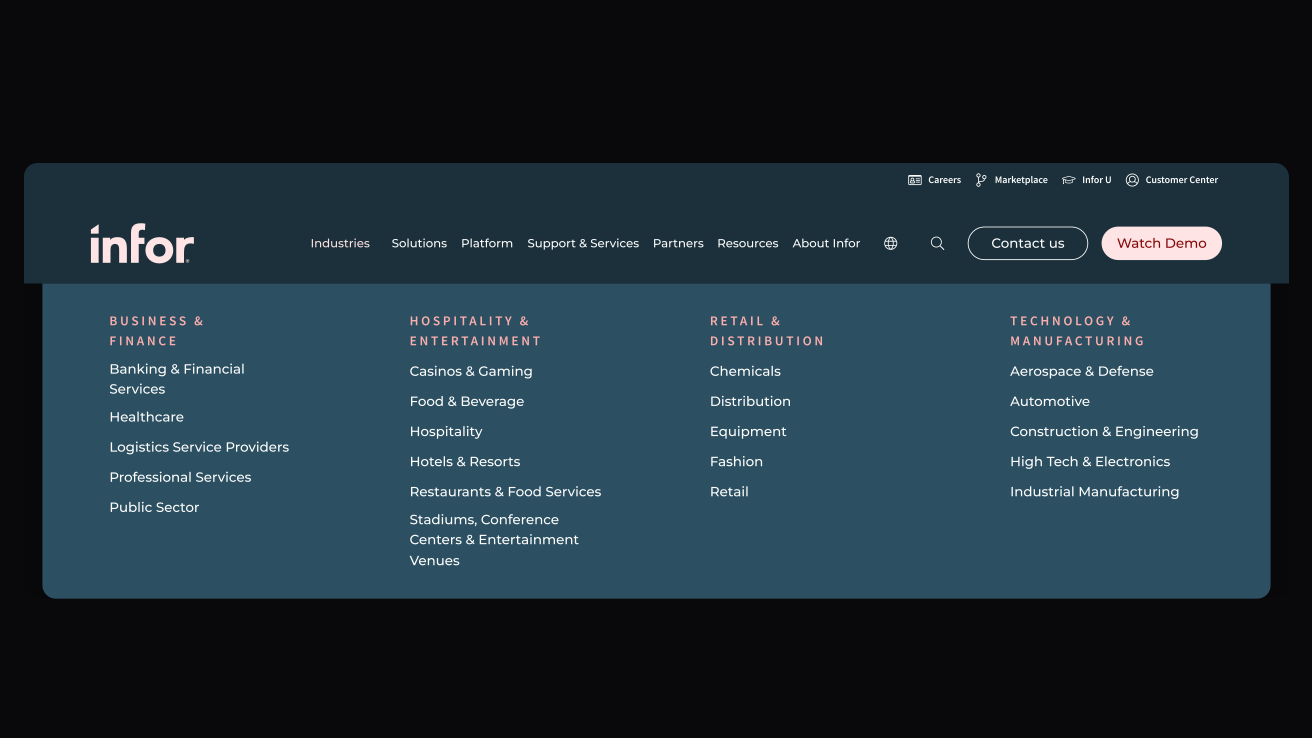
Infor is a massive B2B enterprise software giant, but their digital presence didn't reflect their product's power. The existing platform was fragmented, operating as a maze of isolated sub-domains and disjointed user flows.
— The User Pain: Customers couldn't find the products they needed, leading to sky-high bounce rates and a frustrating navigation experience.
— The Business Pain: This complex Information Architecture became a severe bottleneck for lead generation and product discovery.
— The Design Pain: There was no established Design System. Teams were pushing inconsistent components without WCAG accessibility standards or UX governance.
I joined the project at its inception. My goal wasn't just to "redesign" the interface, but to establish the UX strategy from the ground up: auditing the legacy system, creating a scalable atomic library, and ensuring strict WCAG 2.2 AA compliance across all new touchpoints.
02 / DISENTANGLING THE MESS
Architecting the Ecosystem
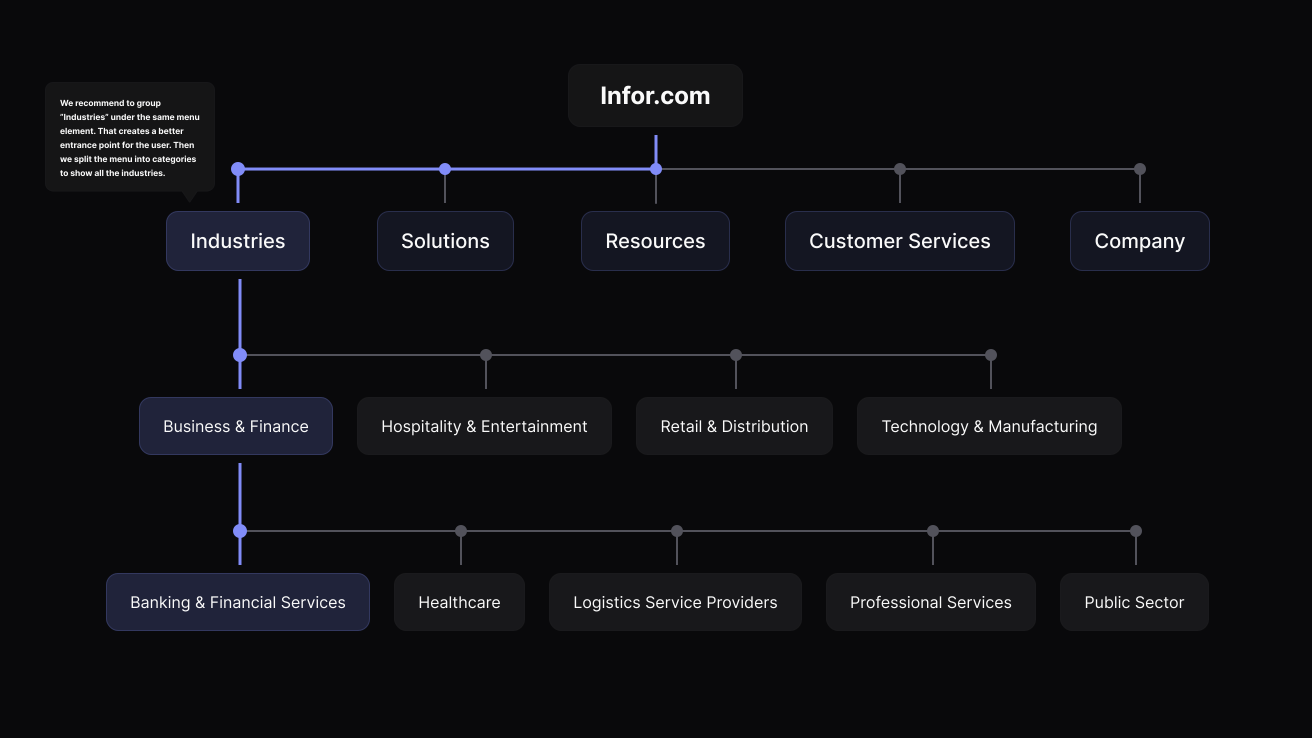
A complex ERP cannot be fixed by simply updating UI components; the core issue was structural. To solve the lead generation bottleneck, we had to rebuild the foundation. I led a deep Information Architecture overhaul using an Object-Oriented UX (OOUX) approach.
— Comprehensive Audit: Mapped over 50 fragmented workflows across the legacy MVP to identify friction points and dead ends.
— User Mental Models: Conducted remote Card Sorting sessions with key B2B stakeholders to align the navigation with how enterprise buyers actually think.
— The Blueprint: Delivered a unified, scalable site map that drastically reduced the cognitive load required to discover core software modules.
03 / THE SYSTEM
Building for Scale & Inclusion
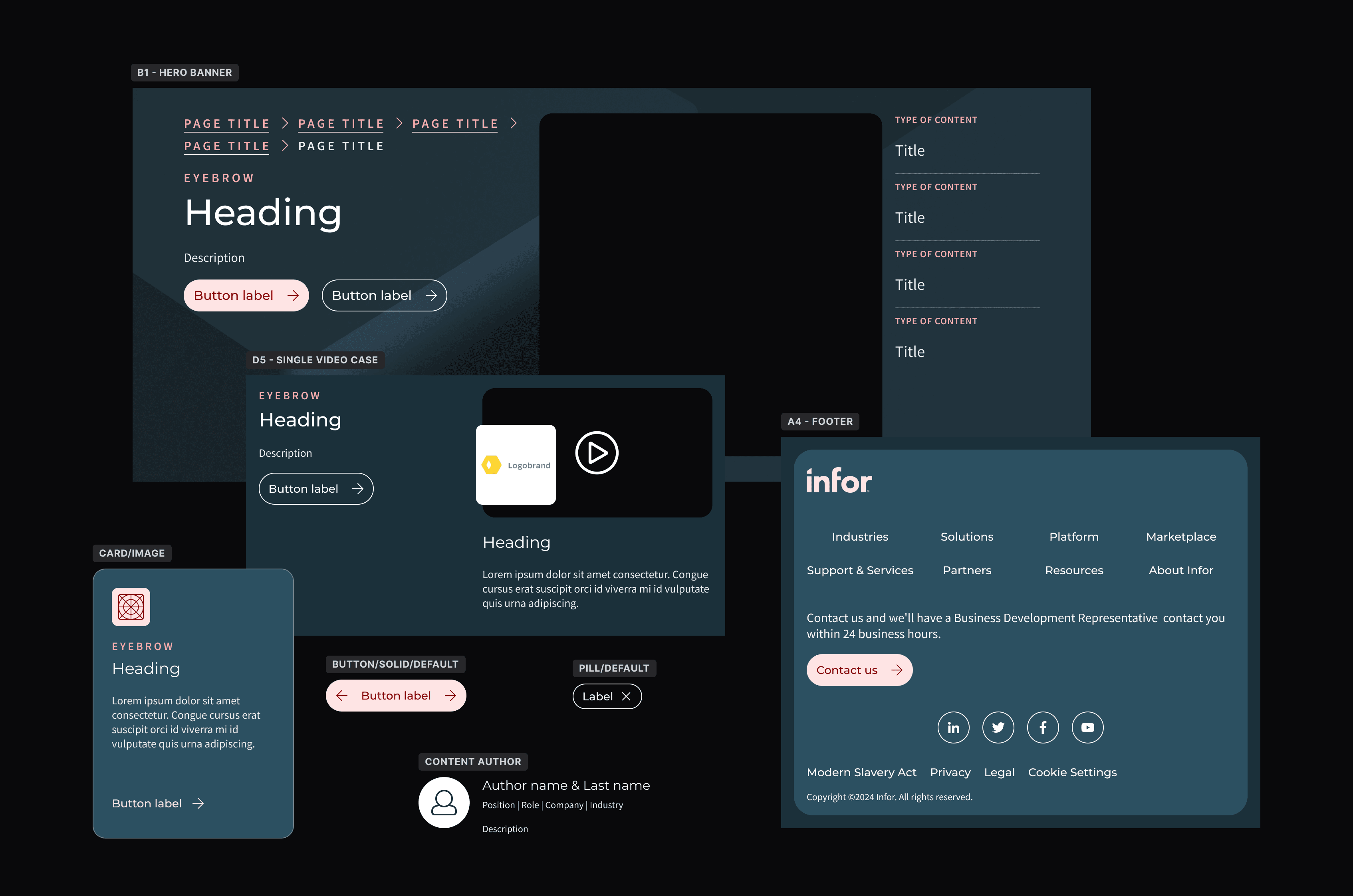
With the architecture validated, the next challenge was visual and technical fragmentation. I spearheaded the creation of a centralized Design System based on Atomic principles, ensuring absolute consistency across the entire ecosystem.
— Atomic Foundation: Standardized typography, spacing, and UI components, eliminating design debt and accelerating the developer handoff.
— Native Accessibility (WCAG 2.2 AA): Accessibility wasn't an afterthought. We baked strict contrast ratios, keyboard navigation, and scalable text directly into the base components.
— Design Governance: Authored comprehensive usage guidelines, empowering content creators and engineers to build new modules autonomously without breaking the system.
04 / OUTCOMES
From Labyrinth to Lead Engine
The new Information Architecture and Design System transformed Infor's digital presence from a fragmented catalog into a cohesive lead-generation engine. By standardizing components and enforcing WCAG guidelines, we drastically reduced time-to-market for new features and provided enterprise buyers with a frictionless, accessible discovery experience.
NEXT CASE STUDY
Let's tackle your next complex challenge.
© 2026 Agustín G. Arenas. Designed with accessibility in mind.