FINTECH
DESIGN OPS
WCAG 2.2
Openbank & Zinia: Unifying the Financial Experience
Led the design unification for Zinia's "Buy Now, Pay Later" (BNPL) platform. Engineered a scalable component library optimized for strict accessibility compliance and frictionless financial flows.
01 / THE FINTECH CHALLENGE
The Scaling Bottleneck
Role: UX/UI Designer & Design Ops.
Timeline: 2024 - 2025
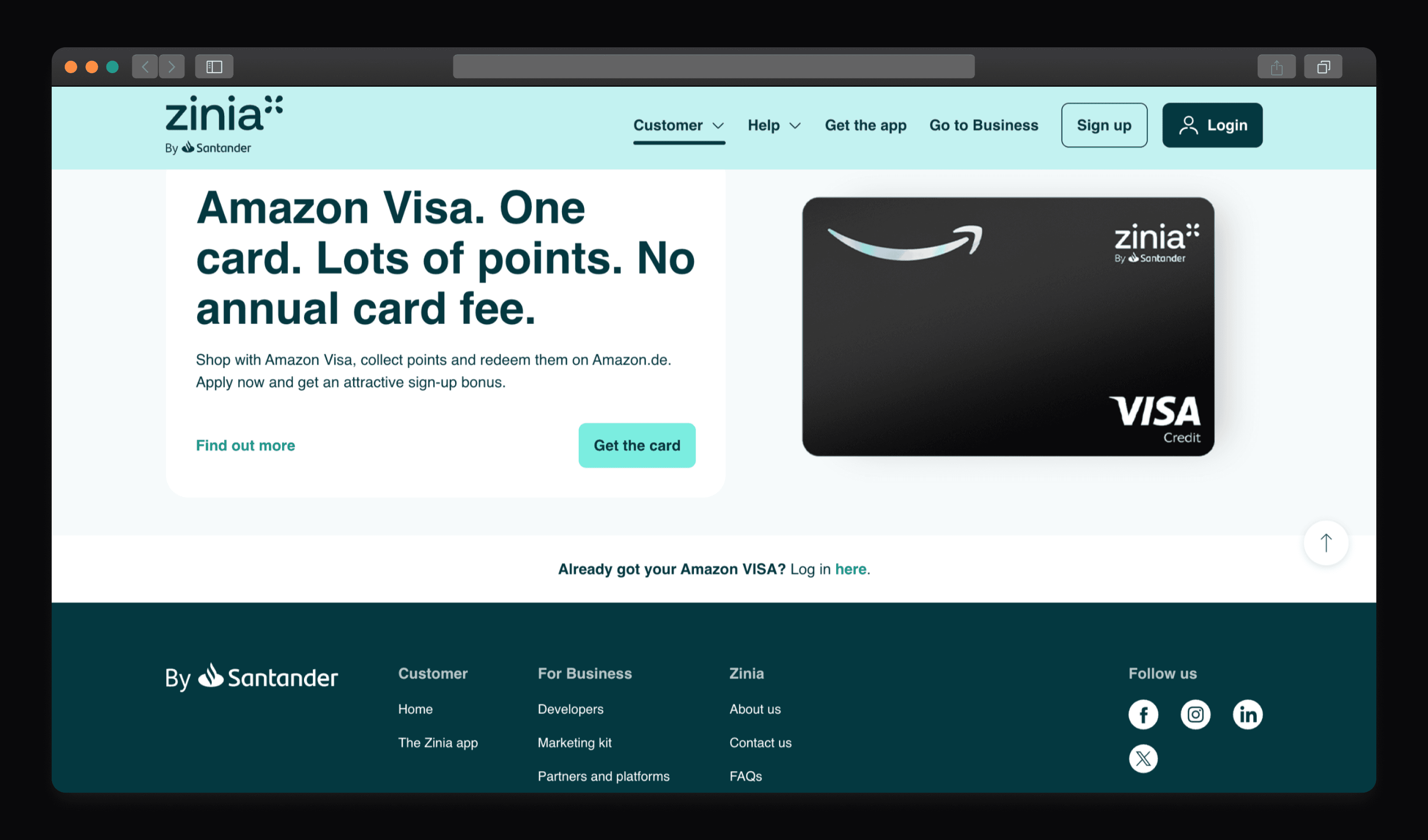
As Zinia expanded its "Buy Now, Pay Later" offering, the design ecosystem faced a critical scaling challenge. The UI library lacked the structural foundation needed to support complex, fast-paced financial flows, leading to accumulating design debt.
— Fragmented Workflows: The design team struggled with disconnected components, which slowed down the delivery of new BNPL features and created visual inconsistencies.
— Compliance Risks: In the financial sector, accessibility is a strict legal requirement. The fragmented libraries lacked a standardized approach to WCAG compliance.
— The Objective: I stepped in to audit the UI inventory and establish a robust Design Ops foundation, creating a single, compliant source of truth for the Zinia ecosystem.
02 / THE AUDIT
The Single Source of Truth
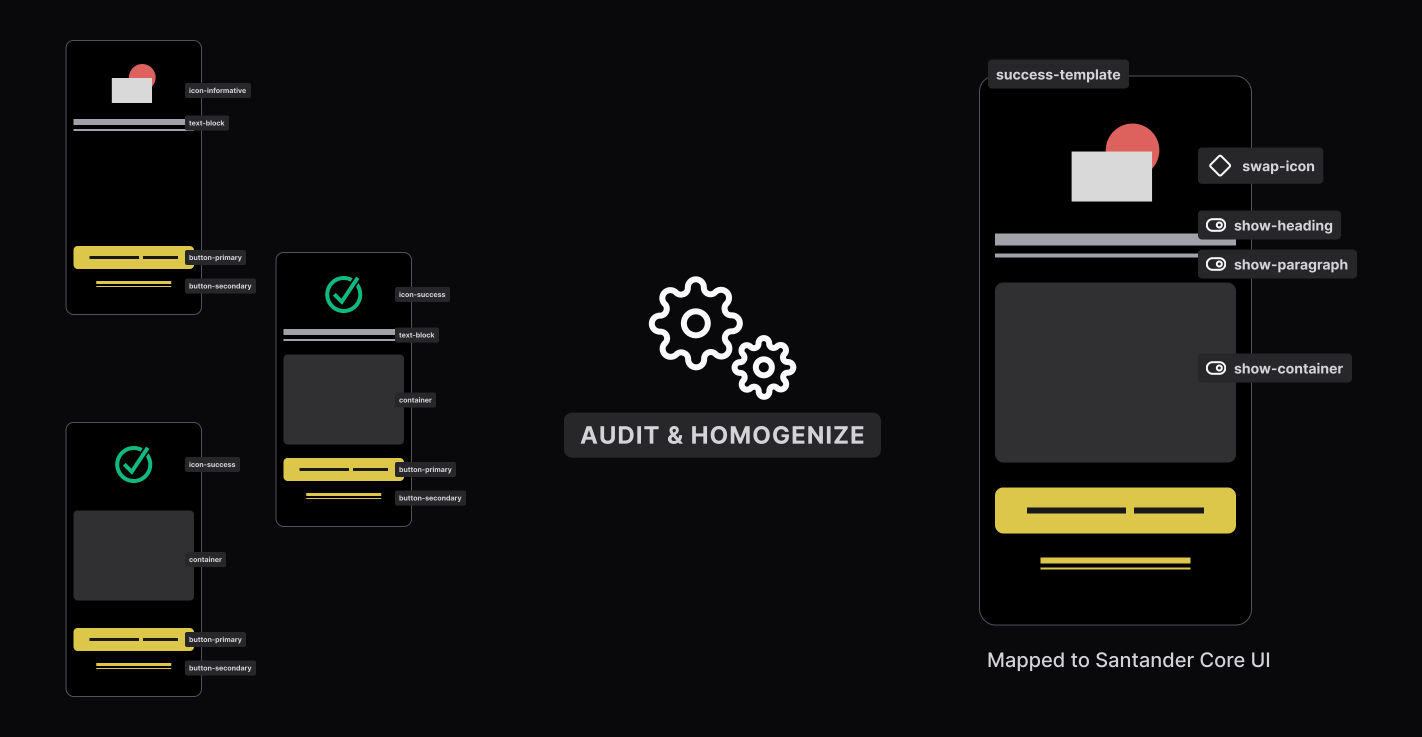
Before drawing any new interfaces, I conducted a surgical audit of the existing component inventory. The goal was to deprecate redundant elements and build a unified design language tailored specifically for BNPL journeys.
— Component Inventory: Mapped every existing state, button, and form field to identify visual friction points and technical debt.
— Unified Architecture: Aligned the design language to ensure that users navigating the credit and checkout flows experienced absolute trust and zero cognitive overload.
03 / BULLETPROOF COMPLIANCE
Baking in Accessibility
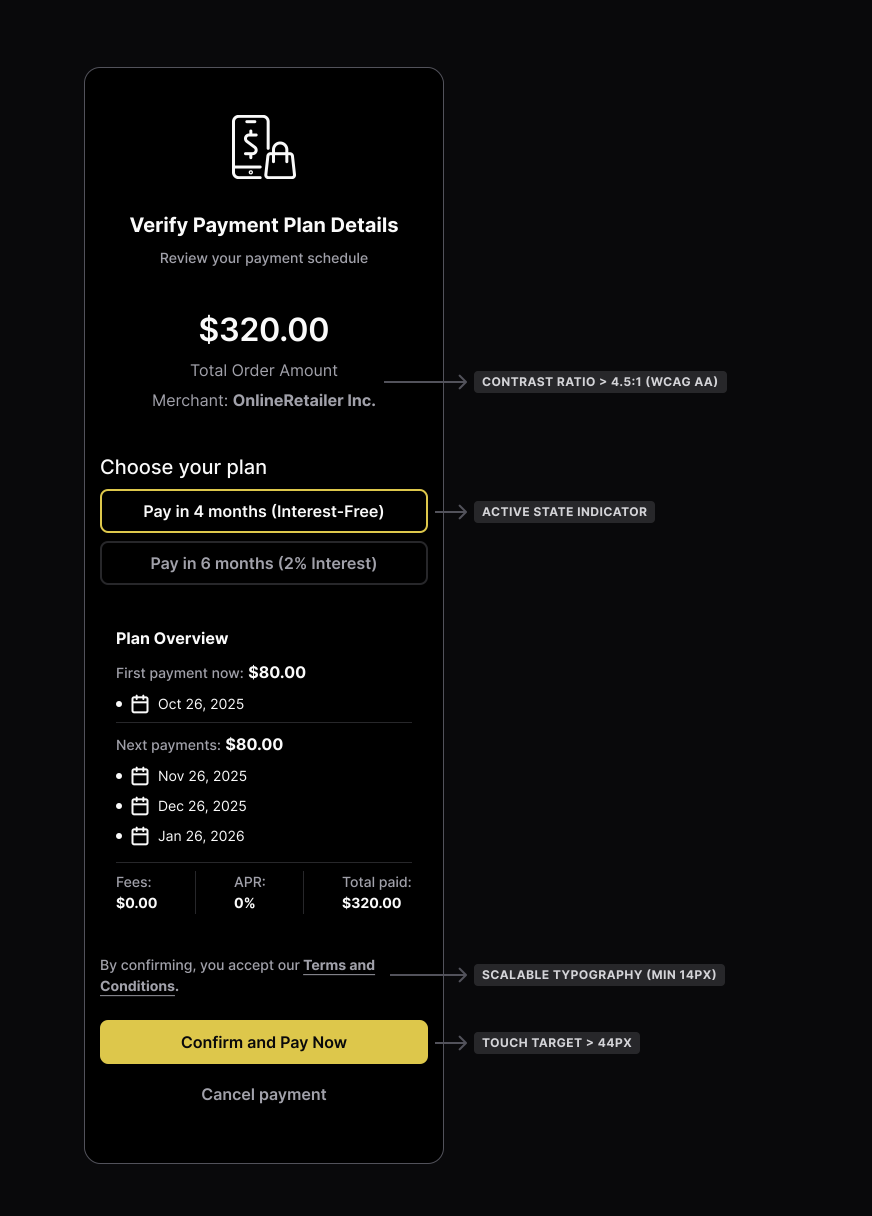
Designing for a financial platform means designing for everyone. I ensured that WCAG 2.2 AA standards weren't treated as an afterthought, but rather embedded directly into the DNA of our components.
— Native Compliance: Enforced strict color contrast ratios and scalable typography across all core components.
— Focus & Navigation: Standardized keyboard navigation and focus states to ensure robust usability for all assistive technologies during sensitive payment flows.
04 / OUTCOMES
Velocity at Scale
By establishing a unified, accessible design system for Zinia, we drastically reduced the friction between design and engineering. The product squad could confidently ship new BNPL features faster, knowing every component was pre-validated for both strict legal compliance and visual consistency.
NEXT CASE STUDY
Let's tackle your next complex challenge.
© 2026 Agustín G. Arenas. Designed with accessibility in mind.